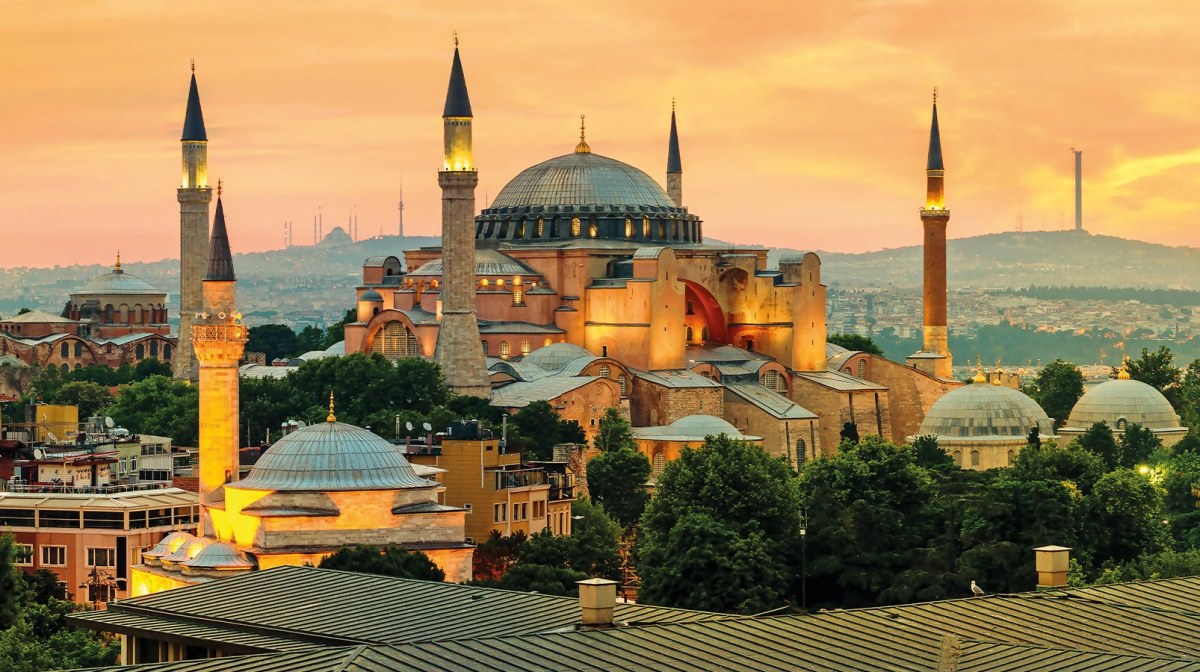
Hagia Sophia… The Architectural Wonder That Shaped the Glory of Empires
Hagia Sophia embodies a story that spans more than 1,500 years, where religion, politics, art, and architecture unite in one monumental structure standing proudly in the heart of Istanbul, as if an entire era has taken shape before the visitor’s eyes.
A Comprehensive Historical Overview
The First Foundation in the Byzantine Era
Hagia Sophia was built in 537 AD during the reign of the Byzantine Emperor Justinian I, who sought to create a magnificent structure surpassing all churches of the empire. He gathered the finest engineers of his time and used innovative architectural techniques to create a massive dome that the world had never seen before.
Surviving Earthquakes and the Challenge of Time
The building endured several powerful earthquakes throughout its history, the most notable being the earthquake of 558 AD, which brought down the original dome. Its reconstruction, however, was done with greater precision, giving Hagia Sophia its reputation as one of the greatest engineering achievements in history.
The Ottoman Conquest and Transformation of Identity
After the conquest of Constantinople in 1453, Sultan Mehmed the Conqueror ordered Hagia Sophia to be converted into a mosque, adding the first minarets. From that moment, it became a symbol of the Ottoman capital and a significant spiritual and political landmark.
Its Transition into a Museum and Back into a Mosque
In 1934, Hagia Sophia was transformed into a museum welcoming millions of visitors yearly, and in 2020, it returned to serving as a mosque open to visitors and tourists, which remains its status until 2025.
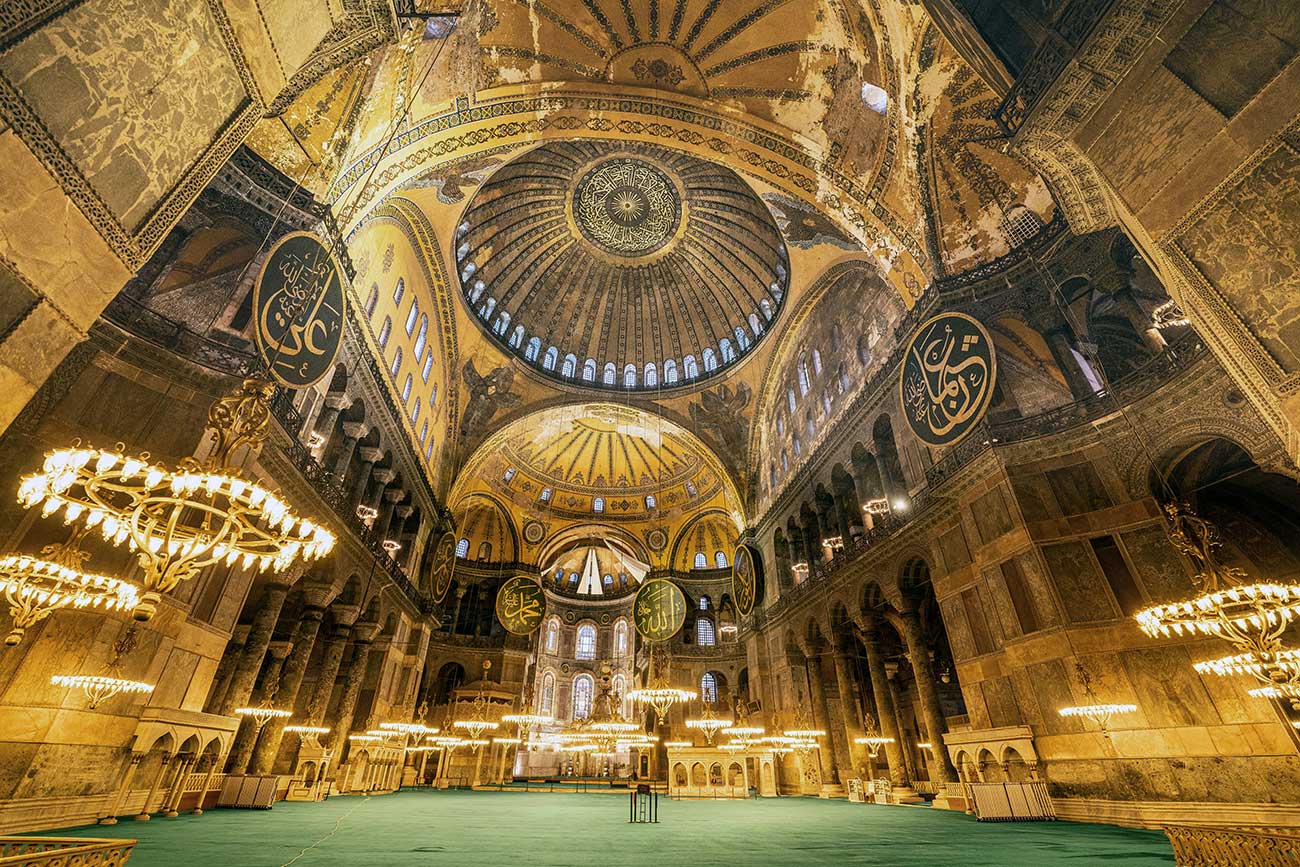
Architecture… A Language That Spans Centuries
The Legendary Dome
The enormous dome, rising about 55 meters with a diameter of 31 meters, was a true architectural revolution. It appears almost suspended in the air due to the use of four massive arches and the innovative “spherical triangles” that grant it remarkable stability.
Golden Mosaics
Inside Hagia Sophia, dazzling mosaics made of gold-glazed glass pieces reflect light in a stunning way. These Byzantine artworks have preserved their brilliance for centuries and are considered some of the most precious artistic treasures in the world.
Luxurious Marble
Marble was brought from various regions such as Anatolia, Egypt, Syria, and Greece. It was arranged in symmetrical, mirror-like patterns that give the interior an exceptional aesthetic harmony.
Ottoman Minarets
After its conversion into a mosque, four impressive minarets were added, each representing a different phase of the Ottoman era. Together, they create a unique harmony between Byzantine and Ottoman architectural styles.
Why Hagia Sophia Attracts Visitors
A Building Carrying a Complete Story
Few landmarks have undergone such major transformations: church, mosque, museum, then mosque once more. This layered history gives every visitor the feeling of walking inside a living history book.
A Strategic Location
It stands in the heart of Sultanahmet Square, facing the Blue Mosque and near Topkapi Palace, making it a central anchor of Istanbul’s most important tourist zone.
An Unmatched Architectural Beauty
The floating dome, gold mosaics, marble columns, natural lighting, and the blend of civilizations create a visually extraordinary experience inside Hagia Sophia.
A Deep Emotional and Historical Impact
Visitors often leave Hagia Sophia with a strong emotional impression. It is not just a place, but a space where civilizations intersect and events that shaped history come together.
The Secrets of Hagia Sophia
The Weeping Column
Inside the building stands a well-known column believed by some to possess healing properties. It contains a small opening where visitors place their fingers, and the moisture inside gives the impression that the column is “weeping,” hence its name.
The Imperial Coronation Spot
At the center of the building lies a marble circle known as the Omphalion. It was the exact spot where Byzantine emperors were crowned. Visitors today still stand on it to take photos, as it represents a historic royal mark.
Unique Acoustics
Hagia Sophia was designed with acoustic precision that allows sound to echo in a balanced and majestic way. This made it ideal for Byzantine chants, and even today the resonance inside continues to fascinate visitors.
Viking Inscriptions
On one of the upper galleries, real carvings left by Viking soldiers who served in the Byzantine Imperial Guard can be found. The most famous one includes the name “Halfdan,” showing the wide cultural diversity that passed through this place.
The Secret of the Golden Light
The dome appears as if it glows from within. The secret lies in the 40 windows around its base that reflect sunlight onto the golden mosaics, creating a magnificent halo-like effect.
Conclusion
Hagia Sophia is not merely a building, but a rare architectural painting that narrates the history of entire civilizations. It is the beating heart of Istanbul, the face that never ages, and the place that leaves a lasting mark on every visitor.
Amazing Istanbul