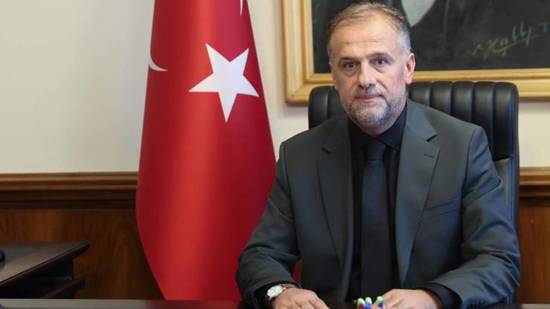
Devlet Bahçeli: Leader of the MHP
He is the leader of the Nationalist Movement Party (MHP), and was Deputy Prime Minister of Türkiye from 1999 to 2002 in the government of Bülent Ecevit, then became a member of the Turkish parliament.
Bahçeli was born on 1 January 1948 in the town of Bahçe in Osmaniye province, and holds an academic degree in economics from Gazi University in Ankara.
His party came third in Türkiye's 2015 elections.
Bahçeli was elected leader of the Nationalist Movement Party, and his party entered government through the coalition mentioned above after 22 years out of power, but his hostility to the idea of joining the European Union threatened the coalition between his party, the Democratic Left Party and the Motherland Party.
After his return, Bahçeli sought to improve his own image and that of the party among liberals wary of its violent past, especially the time when he organised the Grey Wolves group, which was linked to several political assassinations.
He agreed to suspend the death sentence passed on Kurdish rebel leader Abdullah Öcalan, after having insisted on his execution and promised it to his voters in 1999, and he opposed reforms required for Türkiye to meet European standards, such as granting Kurds greater cultural rights.

Devlet Bahçeli
Bahçeli strongly opposed the AK Party government, especially its leader Recep Tayyip Erdoğan, and together with the Republican People's Party (CHP) backed the candidacy of Ekmeleddin İhsanoğlu in the presidential election held in August 2014, but Erdoğan won.
The Nationalist Movement Party also opposed some constitutional reforms, such as granting Kurds cultural rights in broadcasting, media and education, and opposed abolishing the death penalty and yielding to the European Union at any cost.
In its programme for the 2015 elections, his party set out three goals over time: in the short term, to form a government on its own (a very distant goal judging by the numbers and statistics); in the medium term, to make Türkiye a regional power in its second term in office; and in the long term, to make Türkiye a leading world power by 2053.
Alongside these goals, the party made two important promises to voters. The first was to reject the presidential system sought by the ruling party at the time, on the grounds that the parliamentary system suits Türkiye best (even though the party's late founder Alparslan Türkeş had advocated a presidential system); however, the party later backed the presidential system in the 2017 constitutional referendum.
The second was the promise to end the "settlement process" then under way and to eliminate the "terrorism" of the PKK through a security solution, in order to establish peace and security in the country.